(Created page with "''La epistemología estudia las formas de emergencia, legitimación y establecimiento del conocimiento, además de su naturaleza, posibilidad, alcance y fundamentos. Algunas de las preguntas que pretende responder la epistemología son ¿cómo conocemos?, ¿cuáles son las fuentes del conocimiento?, ¿cómo diferenciamos lo verdadero de lo falso? y ¿cuáles son los tipos de conocimiento? El debate no se centra en un conocimiento específico, sino en la forma en como con...")
(9 intermediate revisions by the same user not shown)
Line 1:
Line 1:
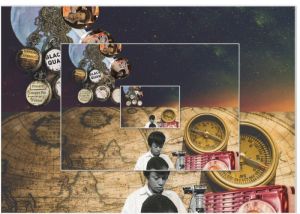
[<nowiki/>[[ScreenStudies:Index|Ir a página principal de Screen Studies]]][[File:Snelting-emoji-default-modifer.jpg|thumb|Modifying the Universal]]
''La epistemología estudia las formas de emergencia, legitimación y establecimiento del conocimiento, además de su naturaleza, posibilidad, alcance y fundamentos. Algunas de las preguntas que pretende responder la epistemología son ¿cómo conocemos?, ¿cuáles son las fuentes del conocimiento?, ¿cómo diferenciamos lo verdadero de lo falso? y ¿cuáles son los tipos de conocimiento? El debate no se centra en un conocimiento específico, sino en la forma en como conocemos. La terminación -cidio proviene del verbo latino caedere, que significa 'matar'.'' Esta sesión orienta la atención hacia una serie de materiales y posturas que plantean preguntas y actitudes con respecto a los procesos nocivos de arrasamiento de la diversidad epistémica, y se pregunta por los modos en que el régimen contemporáneo de pantallas es cómplice con dicho epistemicidio.
''La epistemología estudia las formas de emergencia, legitimación y establecimiento del conocimiento, además de su naturaleza, posibilidad, alcance y fundamentos. Algunas de las preguntas que pretende responder la epistemología son ¿cómo conocemos?, ¿cuáles son las fuentes del conocimiento?, ¿cómo diferenciamos lo verdadero de lo falso? y ¿cuáles son los tipos de conocimiento? El debate no se centra en un conocimiento específico, sino en la forma en como conocemos. La terminación -cidio proviene del verbo latino caedere, que significa 'matar'.'' Esta sesión orienta la atención hacia una serie de materiales y posturas que plantean preguntas y actitudes con respecto a los procesos nocivos de arrasamiento de la diversidad epistémica, y se pregunta por los modos en que el régimen contemporáneo de pantallas es cómplice con dicho epistemicidio.
Material clave:
'''Voluptuous Disintegration: A Future History of Black Computational Thought''' (Romi Ron Morrison, 2022) https://static1.squarespace.com/static/5a15cc35ccc5c5ef7b89ee2d/t/6356823b00604d19013fee99/1666613820237/digitalhumanities.org-Voluptuous+Disintegration+A+Future+History+of+Black+Computational+Thought+%281%29.pdf
[[File:Boarding_pass.png|thumb|Tarjeta de embarque. Ejemplo de catalización epistemicida por optimización de la experiencia mundana de "volar"]]
[[File:Boarding_pass.png|thumb|Tarjeta de embarque. Ejemplo de catalización epistemicida por optimización de la experiencia mundana de "volar"]]
Line 56:
Line 62:
* UNICODE: https://home.unicode.org/
* UNICODE: https://home.unicode.org/
* ''Modifying The Universal which is a close reading of the process of implementing emoji modifiers in 2015. After a public outcry against the perceived lack of diversity in emoji characters available on smart-phones, the Unicode Consortium added five “Skin tone modifiers” to the set and considered the issue resolved.'' ''Modifying the Universal asks how and why mainstream communication infrastructures promote universalist values and at the same time provide means for separating users along fault lines of race, gender and age. While the “modifiers” function within the universalist belief-system of Unicode, they start to function as encoded means for segregation instead of a response to the increasing complexity of cross-device and cross-cultural computing. This situation demands a re-imagination of compatibility in terms of difference.'' -- Modifying the Universal, Roel Roscam Abbing, Peggy Pierrot, Femke Snelting, 2019) https://www.data-browser.net/pdf/DB06_Executing_Practices.pdf
* ''The unknowing brings together unexpected intellectual conversations'' ''that, together, resist dehumanization. The unknowing risks reading what'' ''we cannot bear and what we love too much. Unknowing ourselves. Un-'' ''knowing does not seek or provide answers: the steady focus is, instead, on'' ''working out how to share ideas relationally. Perhaps the function of com-'' ''munication, referencing, citation, is not to master knowing and central-'' ''ize our knowingness, but to share how we know, and share how we came'' ''to know imperfect and sometimes unintelligible but always hopeful and'' ''practical ways to live this world as black. The text passes from a dreamed of'' ''transparency to the opacity produced in words. The parentheses enfold and'' ''convey, the notes buttress, and they leave shadows. Citing is not easy.'' ''Referencing is hard.'' Katherine Mckittrick, ''Footnotes. En: [https://brb.memoryoftheworld.org/Katherine%20McKittrick/Dear%20Science%20and%20Other%20Stories%20(9363)/Dear%20Science%20and%20Other%20Stories%20-%20Katherine%20McKittrick.pdf Dear Science and Other Stories.]'' (2021)
* ''The unknowing brings together unexpected intellectual conversations'' ''that, together, resist dehumanization. The unknowing risks reading what'' ''we cannot bear and what we love too much. Unknowing ourselves. Un-'' ''knowing does not seek or provide answers: the steady focus is, instead, on'' ''working out how to share ideas relationally. Perhaps the function of com-'' ''munication, referencing, citation, is not to master knowing and central-'' ''ize our knowingness, but to share how we know, and share how we came'' ''to know imperfect and sometimes unintelligible but always hopeful and'' ''practical ways to live this world as black. The text passes from a dreamed of'' ''transparency to the opacity produced in words. The parentheses enfold and'' ''convey, the notes buttress, and they leave shadows. Citing is not easy.'' ''Referencing is hard.'' Katherine Mckittrick, ''Footnotes. En: [https://brb.memoryoftheworld.org/Katherine%20McKittrick/Dear%20Science%20and%20Other%20Stories%20(9363)/Dear%20Science%20and%20Other%20Stories%20-%20Katherine%20McKittrick.pdf Dear Science and Other Stories.]'' (2021)
* Amy Suo Wu, ''[https://www.facebook.com/ABCARTS/videos/these-clothes-contain-hidden-messages-the-mix/532558700486108/ Thunderclap]''
* Amy Suo Wu, ''[https://www.facebook.com/ABCARTS/videos/these-clothes-contain-hidden-messages-the-mix/532558700486108/ Thunderclap]''
* We are Here Because of Those that Are Not https://blacktransarchive.com/ (Danielle Brathwaite-Shirley)
== Logísticas contra-lógicas ==
== Logísticas contra-lógicas ==
Line 77:
Line 85:
* ''decolonial computing attempts to engage with the phenomenon of computing from a perspective'' ''informed by (even if not situated at) the margins or periphery of the modern world system'' ''wherein issues of body-politics and geo-politics are analytically fore-grounded. Put'' ''differently, decolonial computing, as a ‘critical’ project, is about interrogating who is doing'' ''computing, where they are doing it, and, thereby, what computing means both'' ''epistemologically (i.e. in relation to knowing) and ontologically (i.e. in relation to being).'' Syed Mustafa Ali (2016). ''[http://oro.open.ac.uk/46718/1/__userdata_documents8_sma78_Desktop_A_Brief_Introduction_to_Decolonial_Compu.pdf A Brief Introduction to Decolonial Computing]''
* ''decolonial computing attempts to engage with the phenomenon of computing from a perspective'' ''informed by (even if not situated at) the margins or periphery of the modern world system'' ''wherein issues of body-politics and geo-politics are analytically fore-grounded. Put'' ''differently, decolonial computing, as a ‘critical’ project, is about interrogating who is doing'' ''computing, where they are doing it, and, thereby, what computing means both'' ''epistemologically (i.e. in relation to knowing) and ontologically (i.e. in relation to being).'' Syed Mustafa Ali (2016). ''[http://oro.open.ac.uk/46718/1/__userdata_documents8_sma78_Desktop_A_Brief_Introduction_to_Decolonial_Compu.pdf A Brief Introduction to Decolonial Computing]''
* قلب (elb), Ramsey Nasser https://nas.sr/%D9%82%D9%84%D8%A8/
* قلب (elb), Ramsey Nasser https://nas.sr/%D9%82%D9%84%D8%A8/
* Black Computational Thought: [https://dhq.digitalhumanities.org/vol/16/3/000634/000634.html Voluptuous Disintegration] (Romi Ron Morrison)
''This organizing can also be seen in the connections made between surveillant technologies and carcerality.''
''Increasingly, pressure is being placed on the ban of facial recognition technology as well as big data itself.''
''Embedded in these calls is a politics of refusal. To refuse the grammar of the present''
''order. To come together in all the ways that are sought to be exorcised, messy, spilling,''
''and raucous. It is a call to entanglement, to fugitivity, and to emancipation in the''
''fullest sense of the word that is endlessly committed to life.''
== Dinámica de trabajo individual en el aula ==
== Dinámica de trabajo grupal en el aula ==
Atendiendo individualmente a las propuestas de investigación desde la perspectiva de esta sesión, cabe someter a cada línea de estudio a las siguientes cuestiones:
Atendiendo en grupo a las propuestas de investigación desde la perspectiva de esta sesión, cabe someter a cada línea de estudio a las siguientes cuestiones:
* ¿De qué manera se manifiesta el epistemicidio a través de este material?
* ¿De qué manera se manifiesta el epistemicidio a través de este material?
Line 85:
Line 104:
* ¿Cuáles otras podrían continuar este trabajo?
* ¿Cuáles otras podrían continuar este trabajo?
* ¿Cómo se vincula esta problemática con los dispositivos mundanos y complejos de mediación por pantallas?
* ¿Cómo se vincula esta problemática con los dispositivos mundanos y complejos de mediación por pantallas?
* ¿Cómo afecta esto a tu sensibilidad cinematográfica, representacional, narrativa, etc?
* ¿Cómo afecta esto a la sensibilidad cinematográfica, representacional, narrativa, etc?
== +++ ==
== +++ ==
Povinelli (Between Gaia and Ground. Four Axioms of Late Liberlism, 2022)
Elizabeth Povinelli (Between Gaia and Ground. Four Axioms of Late Liberlism, 2022) https://dokumen.pub/between-gaia-and-ground-four-axioms-of-existence-and-the-ancestral-catastrophe-of-late-liberalism-9781478013648-9781478014577-9781478021872.html
Epistemic disobedience (Mignolo) Epistemic Disobedience and the Decolonial Option: A Manifesto https://monoskop.org/images/9/9b/Mignolo_Walter_2011_Epistemic_Disobedience_and_the_Decolonial_Option_A_Manifesto.pdf
Epistemic disobedience (Mignolo) Epistemic Disobedience and the Decolonial Option: A Manifesto
Prime Meridian Unconference https://veralistcenter.org/events/prime-meridian-unconference/
Prime Meridian Unconference <nowiki>https://veralistcenter.org/events/prime-meridian-unconference/</nowiki>
<big><small>Ruha Benjamin (Racial Fictions, Biological Facts: Expanding the Sociological Imagination through Speculative Methods)</small></big> https://catalystjournal.org/index.php/catalyst/article/view/28798/21397
La epistemología estudia las formas de emergencia, legitimación y establecimiento del conocimiento, además de su naturaleza, posibilidad, alcance y fundamentos. Algunas de las preguntas que pretende responder la epistemología son ¿cómo conocemos?, ¿cuáles son las fuentes del conocimiento?, ¿cómo diferenciamos lo verdadero de lo falso? y ¿cuáles son los tipos de conocimiento? El debate no se centra en un conocimiento específico, sino en la forma en como conocemos. La terminación -cidio proviene del verbo latino caedere, que significa 'matar'. Esta sesión orienta la atención hacia una serie de materiales y posturas que plantean preguntas y actitudes con respecto a los procesos nocivos de arrasamiento de la diversidad epistémica, y se pregunta por los modos en que el régimen contemporáneo de pantallas es cómplice con dicho epistemicidio.
Modifying The Universal which is a close reading of the process of implementing emoji modifiers in 2015. After a public outcry against the perceived lack of diversity in emoji characters available on smart-phones, the Unicode Consortium added five “Skin tone modifiers” to the set and considered the issue resolved.Modifying the Universal asks how and why mainstream communication infrastructures promote universalist values and at the same time provide means for separating users along fault lines of race, gender and age. While the “modifiers” function within the universalist belief-system of Unicode, they start to function as encoded means for segregation instead of a response to the increasing complexity of cross-device and cross-cultural computing. This situation demands a re-imagination of compatibility in terms of difference. -- Modifying the Universal, Roel Roscam Abbing, Peggy Pierrot, Femke Snelting, 2019) https://www.data-browser.net/pdf/DB06_Executing_Practices.pdf
La potencia de los dispositivos de desconocimiento
The unknowing brings together unexpected intellectual conversationsthat, together, resist dehumanization. The unknowing risks reading whatwe cannot bear and what we love too much. Unknowing ourselves. Un-knowing does not seek or provide answers: the steady focus is, instead, onworking out how to share ideas relationally. Perhaps the function of com-munication, referencing, citation, is not to master knowing and central-ize our knowingness, but to share how we know, and share how we cameto know imperfect and sometimes unintelligible but always hopeful andpractical ways to live this world as black. The text passes from a dreamed oftransparency to the opacity produced in words. The parentheses enfold andconvey, the notes buttress, and they leave shadows. Citing is not easy.Referencing is hard. Katherine Mckittrick, Footnotes. En: Dear Science and Other Stories. (2021)
decolonial computing attempts to engage with the phenomenon of computing from a perspectiveinformed by (even if not situated at) the margins or periphery of the modern world systemwherein issues of body-politics and geo-politics are analytically fore-grounded. Putdifferently, decolonial computing, as a ‘critical’ project, is about interrogating who is doingcomputing, where they are doing it, and, thereby, what computing means bothepistemologically (i.e. in relation to knowing) and ontologically (i.e. in relation to being). Syed Mustafa Ali (2016). A Brief Introduction to Decolonial Computing
This organizing can also be seen in the connections made between surveillant technologies and carcerality.Increasingly, pressure is being placed on the ban of facial recognition technology as well as big data itself.
Embedded in these calls is a politics of refusal. To refuse the grammar of the present
order. To come together in all the ways that are sought to be exorcised, messy, spilling,
and raucous. It is a call to entanglement, to fugitivity, and to emancipation in the
fullest sense of the word that is endlessly committed to life.
Dinámica de trabajo grupal en el aula
Atendiendo en grupo a las propuestas de investigación desde la perspectiva de esta sesión, cabe someter a cada línea de estudio a las siguientes cuestiones:
¿De qué manera se manifiesta el epistemicidio a través de este material?
¿Qué estrategias de análisis, reacción, antagonismo o resistencia se hacen explícitas?
¿Cuáles otras podrían continuar este trabajo?
¿Cómo se vincula esta problemática con los dispositivos mundanos y complejos de mediación por pantallas?
¿Cómo afecta esto a la sensibilidad cinematográfica, representacional, narrativa, etc?